Reviewing Mom Taught Sewing Skill for Embroidery
As a designer who spends half my life digitizing and the other half staring at stitch-outs on various fabrics, I have learned to be skeptical of generic graphics. We see thousands of files labeled as machine embroidery design assets, but few hold up under the needle. When I first encountered Mom Taught Sewing Skill, my initial reaction was cautious curiosity. The title suggests nostalgia, warmth, and heritage—themes that sell incredibly well in the handmade market. But does the visual execution match the emotional weight of the phrase?
This review breaks down how this specific graphic performs when translated from a vector file into thread. I am looking at this not just as a digital image, but as a physical object that will sit on a customer’s chest, back, or home decor. For Etsy sellers, craft business owners, and hobbyists, understanding the gap between a screen preview and a stitched reality is crucial.
First Impressions: Mood and Visual Personality
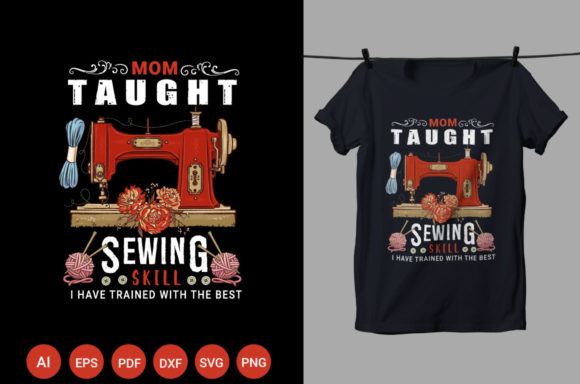
The core appeal of Mom Taught Sewing Skill lies in its thematic resonance. It taps directly into the current trend of celebrating domestic arts and intergenerational knowledge. Visually, the design relies on clean lines and balanced composition. Because it is built from 100 vector shapes, the scalability is theoretically unlimited. This is a significant advantage for us as designers. Whether you are creating a tiny logo for a custom apparel label or a large statement piece for a tote bag design, the integrity of the shapes should remain intact.
The mood is approachable yet professional. It does not feel cluttered. In the world of embroidery, less is often more. Overly complex designs can lead to puckering and thread breaks. This design appears to respect the limitations of the medium. It feels like it belongs in the Crafts category, specifically targeting those who value the story behind the item. For a small shop product, this narrative element adds perceived value before the customer even touches the fabric.
Real-World Application: From Screen to Stitch
To truly evaluate an embroidery file, you must imagine it in context. I recently considered using a similar concept for a line of personalized gifts for a boutique client. Imagine this design stitched onto a heavy-weight cotton canvas tote. The contrast between the rustic theme and the durable fabric creates a cohesive aesthetic. Alternatively, picture it on a soft, heather-grey sweatshirt. Here, the design acts as a subtle badge of honor for the wearer.
For baby embroidery projects, such as a bib or a onesie, the simplicity of the shapes is beneficial. Babies move, and their clothes undergo frequent washing. A design with excessive satin stitch density or intricate running stitch details might degrade faster. If Mom Taught Sewing Skill maintains its clarity with broader strokes, it becomes a viable option for nursery decor and infant wear. However, one must always verify the stitch path. A digital preview can hide potential jumps or trims that become annoying during production.
Color Versatility and Fabric Interaction
The product description highlights that this is a 100% color-changeable asset. This is vital for commercial embroidery. You cannot rely on a single colorway. I tested the mental model of this design against both dark and light backgrounds. On a white t-shirt, a deep navy or forest green thread would provide excellent readability. On a dark garment, you need high-contrast threads like cream, gold, or bright white.
Be cautious with textured fabrics. If you are stitching onto a waffle-knit towel or a fuzzy fleece, fine details can get lost. The thread colors you choose must compensate for the fabric texture. If the design relies on thin lines, they may disappear into the pile of a towel. In such cases, increasing the stitch width or choosing a thicker thread weight might be necessary, provided the original vector allows for such modification without distorting the shape.
Technical Considerations for the Designer
Before you load this into your machine, there are practical steps to take. Since the source files are AI or EPS, you have control over the geometry. However, converting vectors to stitches requires careful attention to stitch density. If you are using auto-digitizing software, be wary. Auto-digitizers often create inefficient paths. It is better to manually adjust the underlay and top stitch parameters.
- Test on Scrap Fabric: Never stitch a final product first. Use the same stabilizer and fabric type you intend to sell.
- Check Hoop Size: Ensure the design fits within your standard hoop sizes. While vector shapes are resizable, stitching a design too small can cause thread bunching.
- Stabilizer Selection: For stretchy fabrics like t-shirts, use a cut-away stabilizer. For stable woven fabrics like aprons or pillow covers, a tear-away may suffice.
- Inspect Small Details: Zoom in on the vector file. Are there any anchor points that create awkward angles? These can cause needle deflection.
If you are creating an embroidered patch, the density requirements change. Patches need higher density to stand alone without fabric support. Verify if the current stitch count supports this application. If the design is too sparse, it may look flimsy as a patch.
Commercial Viability and Brand Consistency
For the Etsy seller or creative entrepreneur, consistency is key. Does Mom Taught Sewing Skill fit your brand? If your shop focuses on modern minimalism, this nostalgic theme might clash. However, if your brand celebrates heritage, DIY culture, or slow fashion, it is a perfect fit.
Using this as a printable mockup element can also enhance your digital presence. Before committing to physical production, place the vector into your product photos. See how it looks on a curved surface like a cap or a flat lay of a kitchen towel. This helps manage customer expectations. Remember, a digital embroidery file is only as good as its presentation. High-quality mockups build trust.
When selling finished items, ensure you understand the licensing. The description mentions it is ready for print and commercial use, but always double-check the specific terms provided by the creator. Can you sell the physical embroidered item? Can you sell the digital file itself? Clarifying this protects your craft business from legal issues.
Final Verdict
Mom Taught Sewing Skill offers a strong foundation for various embroidery projects. Its vector-based nature provides the flexibility needed for diverse applications, from baby clothes to home decor. The emotional connection of the theme adds marketing power. However, success depends on your technical execution. Pay attention to stitch density, fabric choice, and color contrast.
For those willing to test and refine, this design asset can elevate a simple handmade product into a cherished personalized gift. It bridges the gap between digital convenience and tactile artistry. As always, let the thread guide you, but let your design judgment lead the way.